Showing posts with label film review. Show all posts
Alfred Hitchcock’s 1960 film Psycho is psychological horror story which shocked audiences in 1960 and even nowadays  for those not familiar with the story continues to offer shock and suspense. The death of the leading lady within the first hour was and still is a surprise to the audience and leaves them wondering where the story is going to go.
 
The film is 109 minutes long, but he offs his heroine, the glamorous miscreant with whom he's made us identify, after just 47. In 1960, this generated, by all accounts, an unprecedented sense of careering into uncharted and terrifying territory: what the hell would happen next? Even now, it's distinctly unnerving. (Monahan 2015)
 
fig.1
 
 
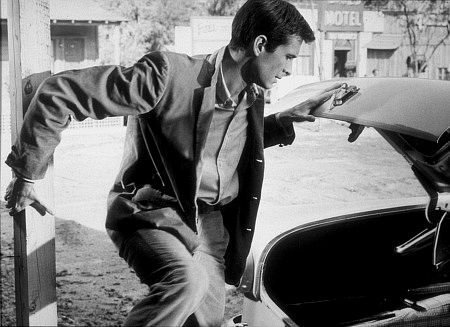
The story continues to provide suspense through its twists and turns so as an audience you never are sure where it is going, as Norman Bates cleans the motel room after he has murdered Marion you are expecting  for him to find the money she stole and hid in the paper,  but it simply gets thrown in the boot of the car with Marion’s body which is then pushed in to a swamp
 fig.2
 
 
"Psycho" continues to work as a frightening, insinuating thriller. That's largely because of Hitchcock's artistry in two areas that are not as obvious: The setup of the Marion Crane story, and the relationship between Marion and Norman. (Ebert 1998)
 
Alfred Hitchcock manipulates his audience through the use of the camera work and musical accompaniments, the black and white photography works very well and provides the film with a dark mood, he could have used colour but chose not to.
 
The black-and-white photography is perfect for the film's tone and mood - the starkness of color would have blurred the nightmarish quality. It wasn't a message that stirred the audiences, nor was it a great performance...they were aroused by pure film. (1960)
 
 Bibliography:

Websites:
Mark Monahan
30 Jun 2015
Roger Ebert
December 6, 1998
James Berardinelli
 
 
 Images


King Kong

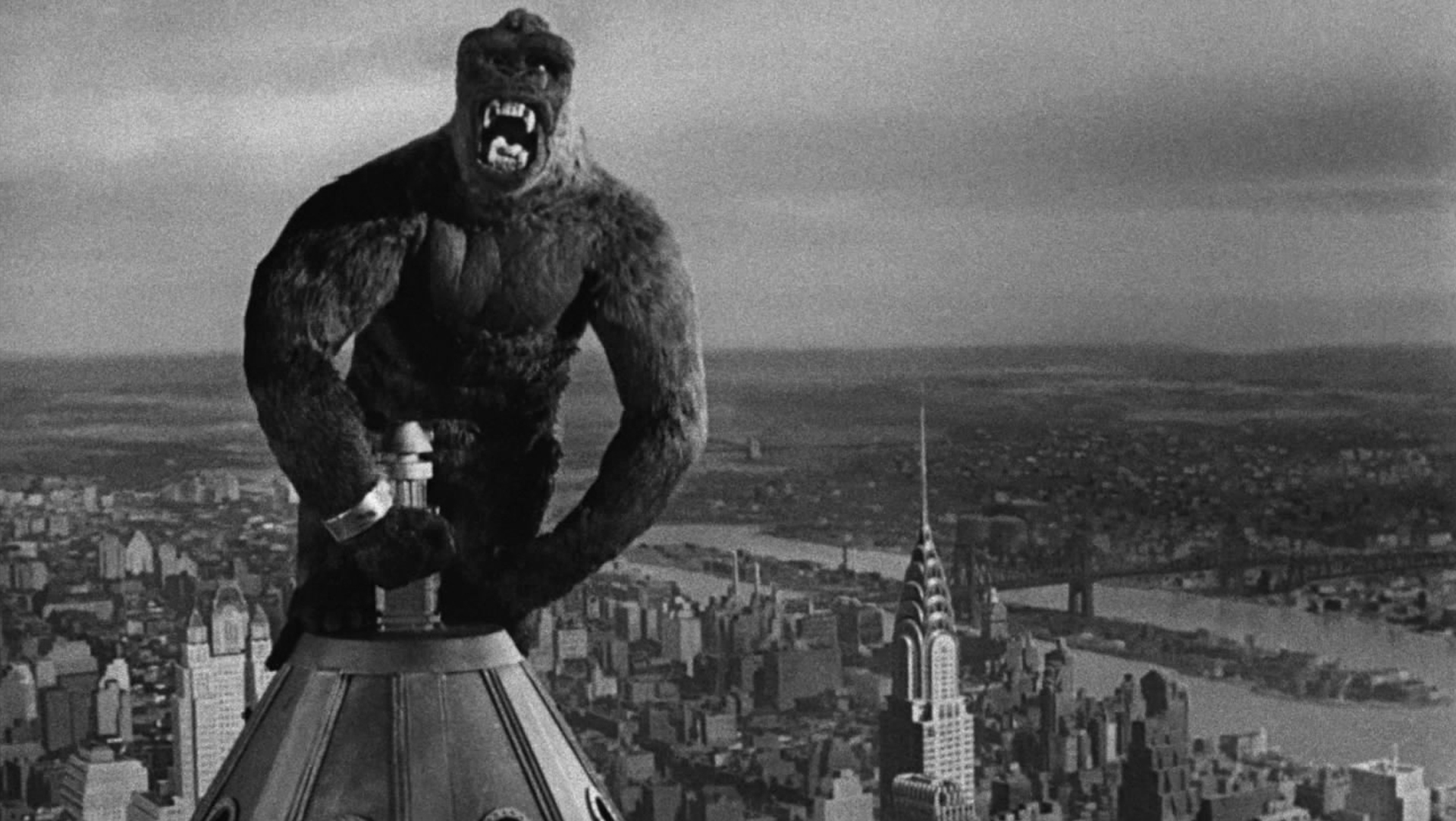
King Kong (1933) produced and directed by Merian C Cooper and Ernest B Schoedsack is an action fantasy set in the year in which it was made. This black and white film follows the story of the production of a film in which the producer wants to capture the story of Kong a giant ape. When the character Cori Denham takes his film crew to a remote island the islands natives capture his leading lady, Ann, to offer her as a sacrifice to the giant ape, Kong. Although offered as a sacrifice Kong protects Ann from anything that attempts to harm her, including dinosaurs and oversized snakes, as well as those attempting to rescue her; developing a strong attachment to his victim.  After using gas bombs to knock Kong out and rescue Ann, they take him back to New York and parade him as the eighth wonder of world. Kong escapes from Denham, finds Ann  and causes destruction across the city ending up at the top of the Empire State building in what is the most iconic image from the film.


The variety of special effects, that include live action, back projection, stop motion, miniature models, glass painting, use of mirrors and slight of hand were used throughout the film and pioneered by Willis O’Brien and were considered leading edge film production at the time. However, compared to the 2005 King Kong remake, these effects are now out dated.

“advances in technology and acting have dated aspects of the production” Berardinelli (2002)


O’Brien’s use of combinations of specials effects were so new at the time that Cooper, Schoedsack and O’Brien were reluctant to share how they had created particular scenes.

“There are many details about the production of King Kong that are not available at present for publication …for whenever you ask Merian C Cooper or his associates a question that trespasses on their secret processes, they invariably reply ‘it was all done with mirrors’”  Goldner and Turner (1933)

The ground breaking use of special effects coupled with a strong story line made the film a success that resulted in remakes in both 1976 and 2005 and paved the way for other film makers.


Image 1 - http://www.filmforlife.org/wp-content/uploads/2014/06/King-Kong.png

Image 2 - http://walshscifi.pbworks.com/f/1329345312/king-kong-1933-1.jpeg


1-      by the Library of Congress and selected for preservation in the National Film Registry.


3- King Kong – How Did They Make It?” -http://cinefex.com/blog/king-kong-or-not/


The Cabinet of Dr Caligari film reviews


The Cabinet of Dr Caligari (1920) directed by Robert Wiene and written by Hans Janowitz and Carl Mayer is a silent horror movie. Told by the character Francis the film tells the story of Dr Caligari and his somnambulist (sleep walker) who are suspected of murder. Friends Alan and Francis visit a carnival where they meet Dr Caligari and his somnambulist who predicts Alan’s death by dawn the next day, when this prediction comes true Francis is determined to expose the killer, who he suspects is Dr Caligari.


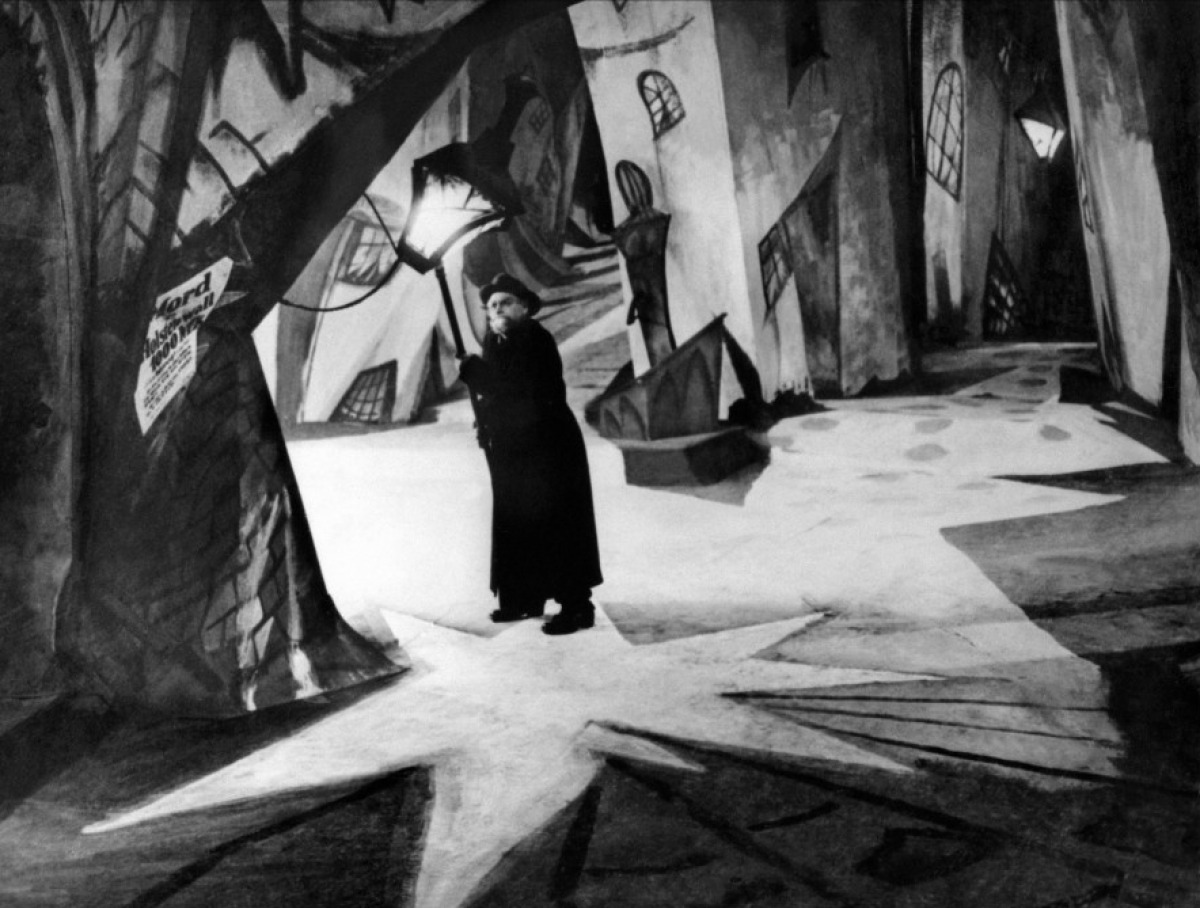
The film features a dark and twisted visual style, the sharp lines and distorted shapes of the set reflect the characters mental state. The characters chairs are enlarged, the windows are out of shape and there are no smooth edges or soft lines presenting a harsh and cold environment. Trees are pointed and jagged and the sharp shape of the grass makes it look like knives. Lotte Eisner, author of the Haunted Screen wrote “objects in the film appear as it they are coming alive and seem to vibrate with an extraordinary spirituality” One exception to this is the scene in the bedroom of Alan’s fiancĂ© Jane, here the lines are soft and smooth suggesting a warmer and calmer environment demonstrating Francis’ affection towards Jane. In the scene where Jane’s body is discovered at the side of the road the positioning of the body is like the lines of the set, with her arms and legs at angles to her torso. “The Cabinet of Dr Caligari’s most visually dynamic sequence, where Veidt’s body is made just as askew as the sets themselves” Clayton Dillard Throughout the film the shapes and lines reflect the atmosphere and mood of this horror film. This technique continues to be used in the films up to the present day


Previous PostOlder Posts Home